|
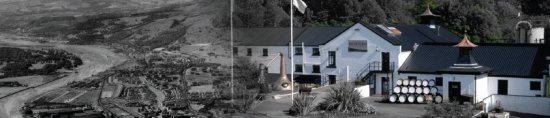
Continuing support for its local
community and Erskine, the charity that
provides nursing and medical care for
former members of the Armed Forces,
Auchentoshan Distillery today marked the
70th anniversary of the Clydebank Blitz
with the unveiling of a commemorative
plaque and tree.
On the 70th anniversary of the Clydebank
Blitz, which fell today, Monday 14th
March, Auchentoshan Distillery invited
local residents, veterans, dignitaries
and volunteers from the Erskine charity
to the Distillery Visitor Centre for a
VIP lunch and unveiling.
Founded in 1916, Erskine has provided
nursing and medical care for former
members of the Armed Forces through two
World Wars and the more recent conflicts
and peace-keeping initiatives of the
20th and 21st centuries. Rebuilding
shattered lives, restoring dignity and
providing first-class care to ex-Service
men and women both young and old have
been the cornerstones on which Erskine
has built an unrivalled reputation.
Seventy commemorative bottles of the
Auchentoshan 12 Years Old triple
distilled single malt whisky have been
created, all individually numbered and
packaged with an additional
commemorative label on the carton. A
portion of the sales proceeds of the 70
bottles will be donated to Erskine.

The Clydebank Blitz was two devastating
Luftwaffe air raids by 439 bombers on
Clydebank over the nights of 13th and
14th March 1941. 528 people died, 617
people were seriously injured, and
hundreds more were injured by blast
debris. Out of approximately 12,000
houses, only seven remained undamaged —
with 4,000 completely destroyed and
4,500 severely damaged. Over 35,000
people were made homeless. It was during
this time that Auchentoshan Distillery
was bombed destroying one of the
warehouses and several others were
damaged.
The above picture shows one of the
Clydebank streets where blitz casualties
were high, Napier Street near Rothesay
Dock. Here, at numbers 2 and 4, 27
people lost their lives in the two
nights of the bombing. Like the
surrounding properties on Glasgow Road,
the closes were reinforced with
scaffolding, and their entrances further
protected by brick-built baffle walls.
Tenants were expected to shelter in the
protected closes during air raids.
|




 Keep up to date with
the latest whisky news and special
offers
Keep up to date with
the latest whisky news and special
offers