|
Aberlour
shows us what lies behind the crafting
of its rich complex malt in a series of
super-macro images.
So you think you know your whisky?
Well well perhaps you should think again
as Aberlour are giving you a chance to
have a closer look at their premium
single malt spirit. In a world-first
series of super-macro images of whisky,
Aberlour shows us what lies beyond the
glass and cask and have allowed us an
insight into the natural elements and
distillers’ craft which are vital to the
creation of this enigmatic single malt.
The images have been taken by David
Maitland, one of the world’s foremost
nature photographers. Aberlour
commissioned him to chart the journey of
the whisky’s creation taking in
microscopic views of the rock, water and
wood used in the whisky-making process,
such as the granite mountain from where
the distillery takes its spring water,
the oak staves from specially selected
casks in which the whisky is matured,
and finally uncovering never-before-seen
glimpses of the single malt itself.
The photography uses a variety of
techniques to capture some of the
natural elements that contribute to the
unique flavour of this single malt
Scotch, from a glimpse inside each grain
of barley to the actual rings from an
oak cask and the crystalline structure
of the final spirit itself.
The Six
Super-Macro Images Charting The Journey
Of Aberlour's Creation:
Pink Granite:
 Beautiful
Pink Granite was collected from Ben
Rinnes (the mountain is formed from
different granites) – the spring water
used for the Aberlour flows down from
the mountain and retains a unique
softness thanks to the granite base over
which it flows. Beautiful
Pink Granite was collected from Ben
Rinnes (the mountain is formed from
different granites) – the spring water
used for the Aberlour flows down from
the mountain and retains a unique
softness thanks to the granite base over
which it flows.
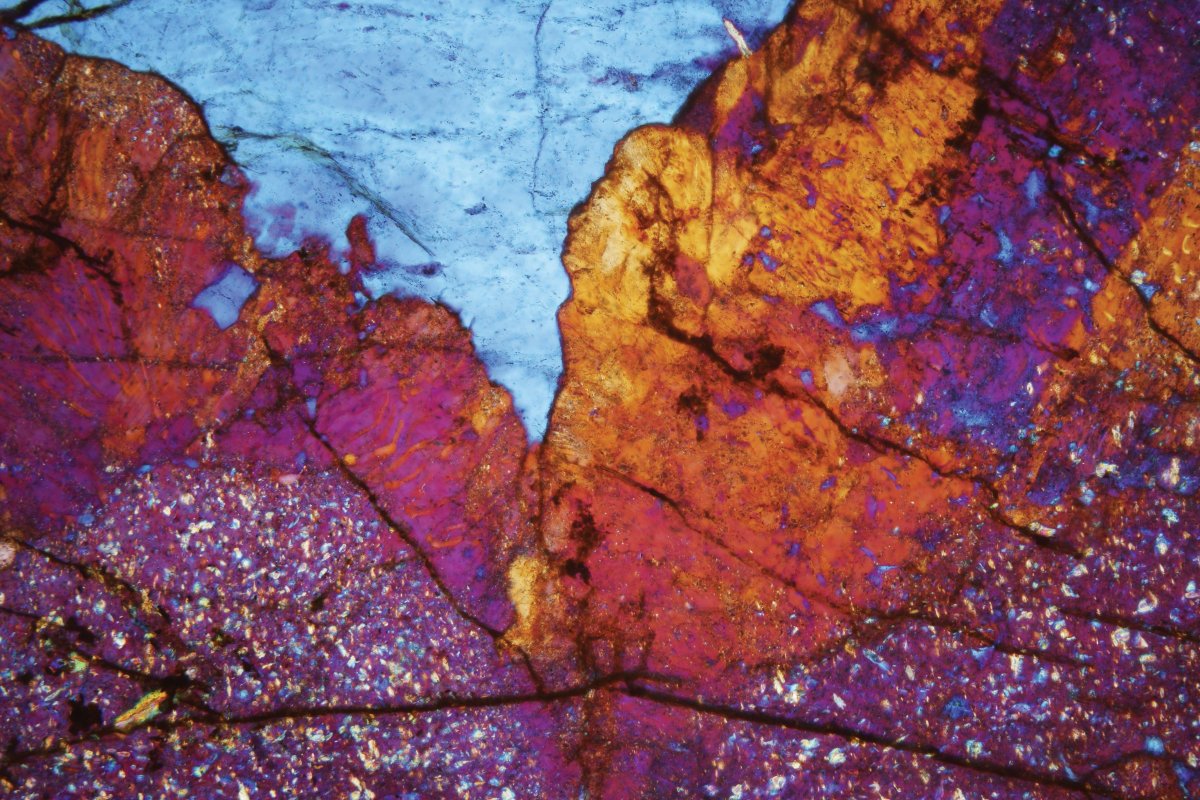
The granite was cut into thin sections
just 30 millionths of a meter (30 μm)
thin so that the rock becomes
transparent. The granite is composed
mainly of alkali feldspar and quartz
with intermixed brown biotite. There
also are tiny flecks (inclusions) of all
manner of trace elements. Here, all
elements combine to form a miniature
landscape. The image was taken using
crossed polarized light at a
magnification of 200x.
Water:
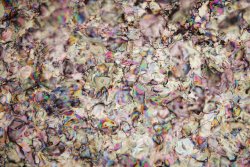 The water was captured at 400x
magnification using differential
interference contrast to get the
colours. David used polarized light,
which allows us to see the optical
properties specific to the water and
reveals detailed information concerning
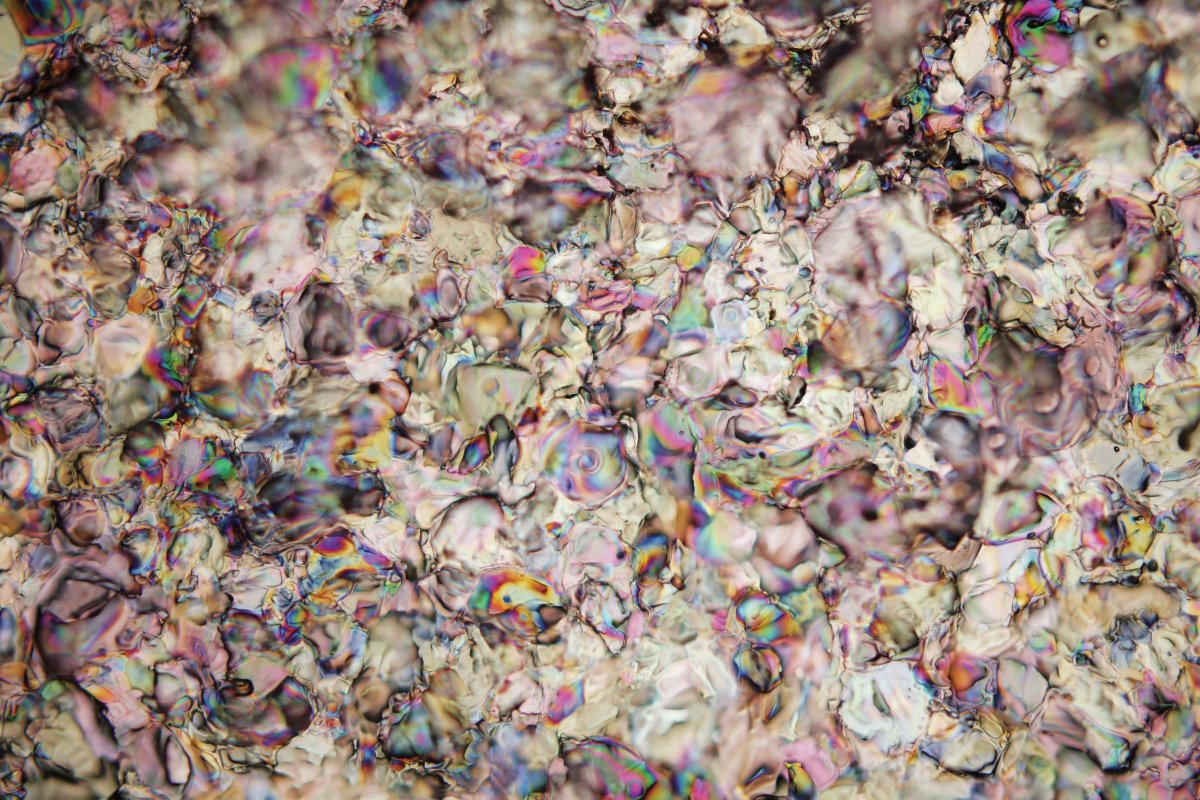
the structure and its composition. The water was captured at 400x
magnification using differential
interference contrast to get the
colours. David used polarized light,
which allows us to see the optical
properties specific to the water and
reveals detailed information concerning
the structure and its composition.
The colours in the water are a result of
the way the water interacts with the
polarized light. Due to the varying
refractive indices, the water appears
multi-coloured. The polarized light can
be further enhanced using sophisticated
polarizing techniques such as
Differential Interference Contrast (DIC)
which also produces a sense of depth and
a 3-D quality.
David captured the water images by
freezing the water and photographing it
melting under the microscope - the
colour background is bent by the melting
water into the interesting forms and
shapes in the picture.
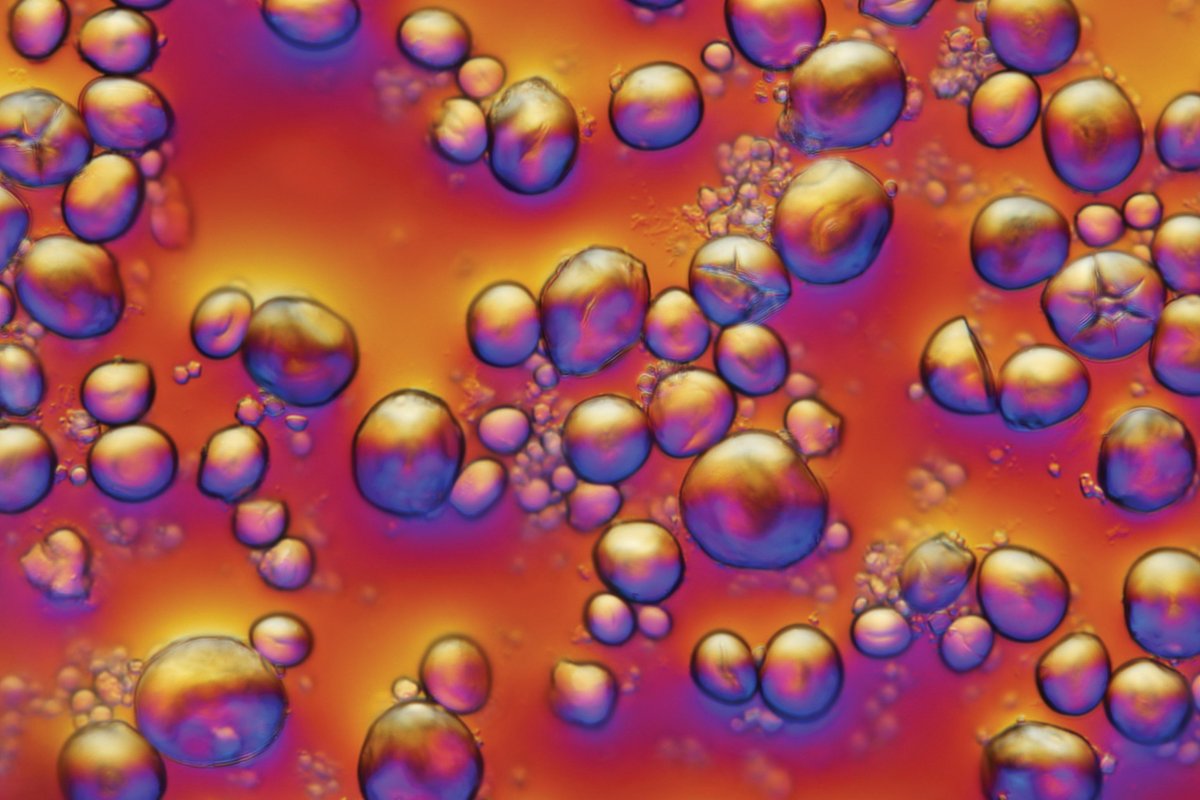
Barley:
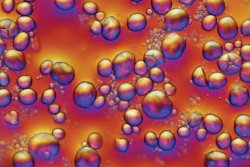 The barley grain is mostly starch which
is stored as individual grains (amyloplasts).
These amyoplasts are grains within the
grain, which act as a fermenter, to make
the whisky’s alcohol, as well as give
its depth of flavour. These tiny
structures – the smallest grains are
about 2 millionths of a meter (μm) in
diameter, while the largest are about 20
μm. The barley grain is mostly starch which
is stored as individual grains (amyloplasts).
These amyoplasts are grains within the
grain, which act as a fermenter, to make
the whisky’s alcohol, as well as give
its depth of flavour. These tiny
structures – the smallest grains are
about 2 millionths of a meter (μm) in
diameter, while the largest are about 20
μm.
The picture is taken at 400x
magnification using differential
interference contrast (DIC) lighting
techniques.
Sherry Cask:
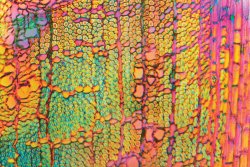 All Aberlour single malts display the
influence of maturation in ex-Spanish
Oloroso Sherry Butts which are
constructed from mature European or
"Spanish" Oak trees, Quercus petraea
petraea, (formally Q. sessilis). All Aberlour single malts display the
influence of maturation in ex-Spanish
Oloroso Sherry Butts which are
constructed from mature European or
"Spanish" Oak trees, Quercus petraea
petraea, (formally Q. sessilis).
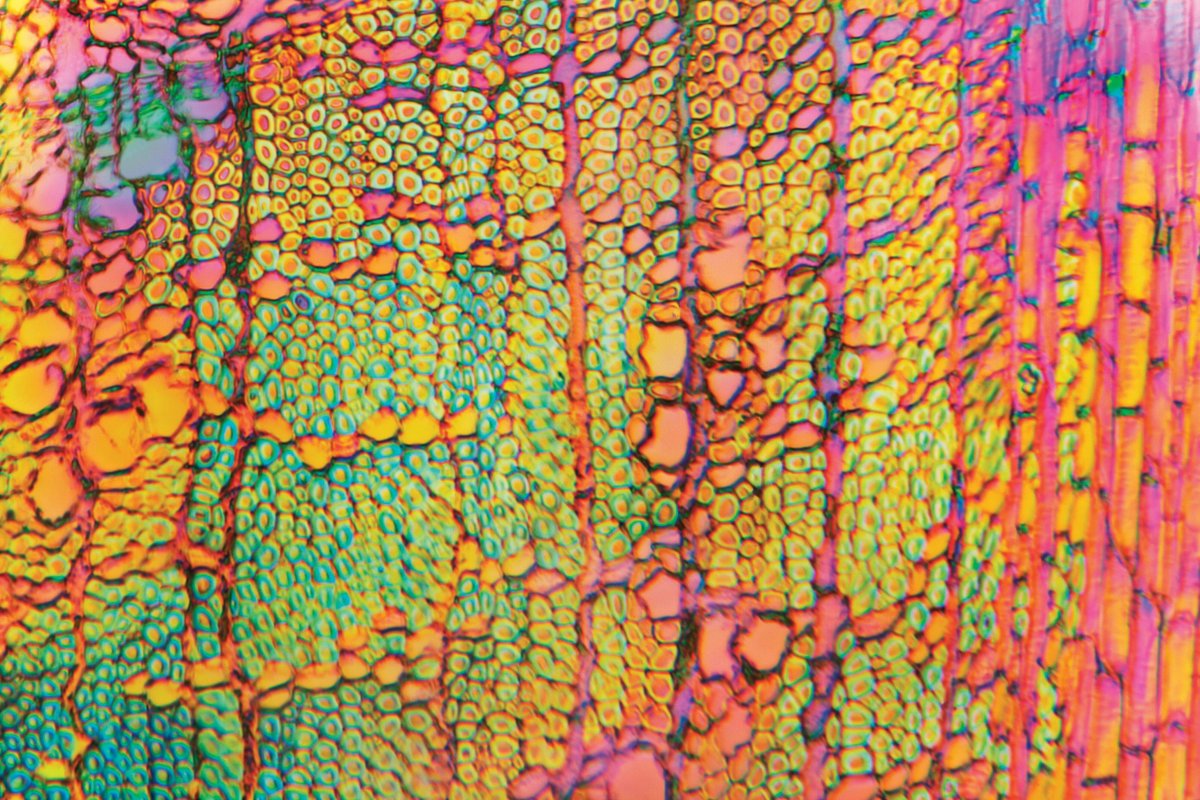
A thin transverse section or slice of
oak (20 millionths of a meter, 20 μm
thick) shows an intricate pattern of
tracheids (large rings through which the
tree draws water) and
lignin-strengthened parenchyma wood
cells within the heartwood of the oak.
During the whisky’s maturation process
within the oak cask, the alcohol works
on heartwood components (lignin,
hemicellulose and tannin amongst others)
to produce the complex caramel and
aromatic flavours, colour, and
fragrances unique to Aberlour whisky.
The image was made at 200x magnification
using a special form of Interference
contrast lighting.
Aberlour 12
Year Old:
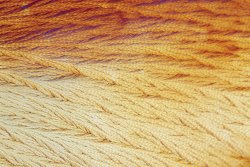 For the 12 Year Old, David evaporated a
large volume of this beautiful whisky
(such a waste!) which leaves behind a
super-concentrated solution of dissolved
complex natural elements which
originated from the different casks in
which the whisky was matured. This blend
of natural elements can sometimes be
made to crystallise in remarkable and
unique patterns. For the 12 Year Old, David evaporated a
large volume of this beautiful whisky
(such a waste!) which leaves behind a
super-concentrated solution of dissolved
complex natural elements which
originated from the different casks in
which the whisky was matured. This blend
of natural elements can sometimes be
made to crystallise in remarkable and
unique patterns.
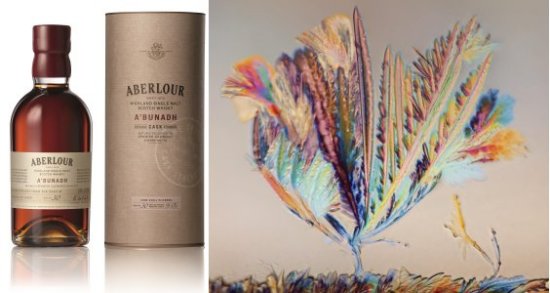
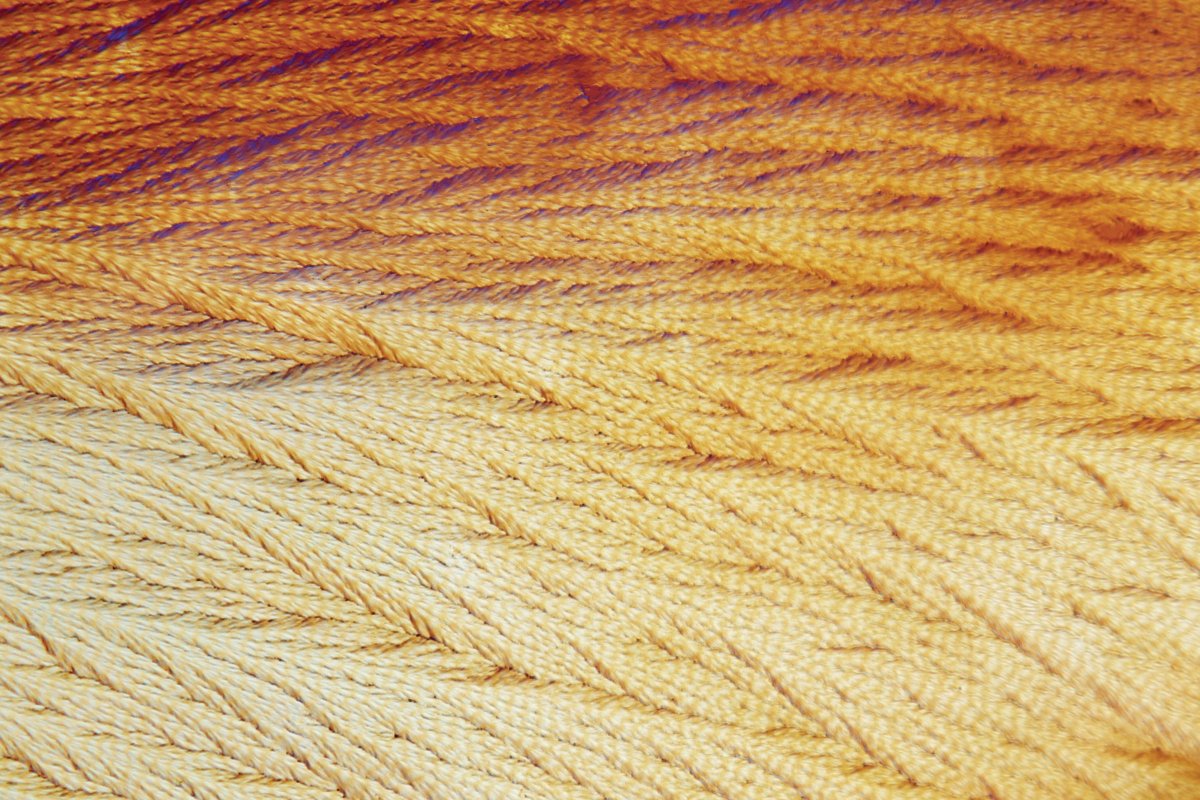
Here, Aberlour’s 12
Year double cask matured whisky has
produced a wonderful feather-like
crystal pattern. This photograph was
captured at 400x magnification using
differential interference contrast (DIC)
lighting techniques.
Aberlour
A’bunadh:
 The hand-crafted and small scale
produced Aberlour Whisky was
photographed after evaporating a large
volume of A’bunadh, which left behind a
super-concentrated solution of dissolved
natural elements which originated from
the cask in which the whisky was
matured. Certain elements within this
can sometimes be made to crystallise in
remarkable and unique patterns. Elements
of Gallic Acid (a product from Tannin in
the oak cask) have been captured forming
an exquisite crystal tree. This
photograph was captured at 200x
magnification using differential
interference contrast (DIC) lighting
techniques. The hand-crafted and small scale
produced Aberlour Whisky was
photographed after evaporating a large
volume of A’bunadh, which left behind a
super-concentrated solution of dissolved
natural elements which originated from
the cask in which the whisky was
matured. Certain elements within this
can sometimes be made to crystallise in
remarkable and unique patterns. Elements
of Gallic Acid (a product from Tannin in
the oak cask) have been captured forming
an exquisite crystal tree. This
photograph was captured at 200x
magnification using differential
interference contrast (DIC) lighting
techniques.
Dr Maitland, a European Wildlife
Photographer of the Year, said: "I was
asked to discover how all the different
elements help craft Aberlour. The
positioning of the distillery at the
foot of Ben Rinnes, and surrounded by
the natural water springs, plays a vital
part in the creation of each bottle of
single malt, as do the casks in which
the whisky is aged. Having the chance to
photograph this journey was a rare
privilege.
"Super macro photography can reveal many
surprises. The crystal structures in the
12-year-old and A’bunadh were simply
beautiful and frequently appeared to
echo the unique and subtle characters of
each whisky."
|






 Keep up to date with
the latest whisky news and special
offers
Keep up to date with
the latest whisky news and special
offers